How to lower your car in GTA 6: suspension and stance
Lowered, Street, Sport and Competition are the GTA 6 suspension levels. Compare their ride height and handling stats on your car, and check clearance.
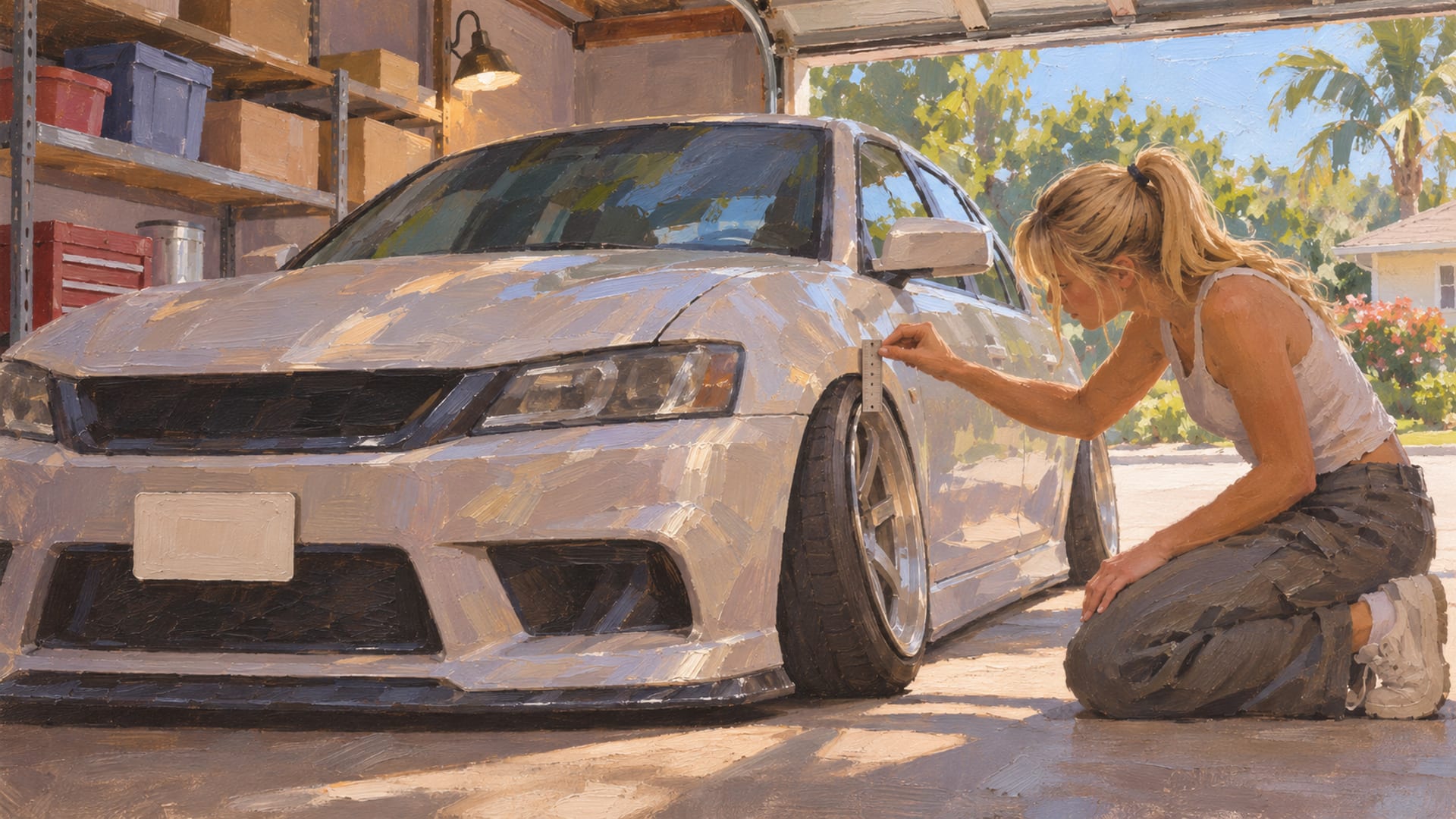
In GTA 6 you lower a car at a compatible mod shop. Drive in a registered personal vehicle, repair it if the game asks, open the shop menu and look for the suspension choices.
Launch-week coverage from PlayStation 5 and Xbox Series X|S lists four levels: Lowered, Street, Sport and Competition. Which ones your car gets depends on the vehicle and the shop, so the preview screen in your own game has the final word.
The trade-off is simple. A lower setup helps on asphalt and costs you clearance and off-road grip. Rockstar's platform page lists PlayStation 5 and Xbox Series X|S for GTA 6, so PC questions live on the PC countdown page.
Key Takeaways
Where it happens
Lowering is done at a compatible mod shop, with a registered personal car that has been repaired if the game requires it.
Four levels
Launch-week coverage lists Lowered, Street, Sport and Competition, with example prices from $500 to $2,200.
The trade-off
On one launch-week Vapid Ganado test, the Lowered kit gained 0.3 asphalt handling and lost 0.3 off-road handling.
Your game decides
Parts, prices and effects vary by vehicle, shop, edition and patch, so preview the change on your own car before you pay.
Where to change suspension in GTA 6
Suspension is a shop job, not something you adjust from the pause menu. The first stop is the same as for any other build: get the car registered as a personal vehicle once the story allows it. The general walkthrough for registration, repairs and the menu overview is in the GTA 6 car customization guide, and it is worth a read before your first visit.
Next, open Map, then Vehicles, then Mod Shops. ViceCityHQ and FinalBoss both describe that path in their launch-week mod-shop coverage. Pick a shop that matches your vehicle type, because the shop decides which parts show up. A tuner car and a lowrider do not head to the same door.
Once you are inside, the launch-week menu has six top-level categories: Pro Builds, Cosmetics, Bodywork, Performance, Wheels and Interior. Suspension may appear under Performance, under Pro Builds or as part of a vehicle-specific build. Look in all three before you decide a car cannot be lowered.
Lowering a car, step by step
Register the car
Make it a personal vehicle when the story allows it.
Open the map
Go to Map, then Vehicles, then Mod Shops.
Choose a matching shop
Pick the shop that fits your vehicle type, such as tuner, lowrider or off-road.
Repair first
Launch-week coverage on Xbox Series X|S says to repair the car before buying parts.
Find the suspension options
Check Performance, Pro Builds and any vehicle-specific build.
Preview the change
Read the price and the stat bars, and look at the ride height on the car.
Confirm after a clearance check
Buy only once you know the terrain you will drive.
Lowered, Street, Sport and Competition compared
GTA 6 Notebook's launch-week customization guide names four suspension levels and gives an example price for each. They are listed from the mildest drop to the most performance-focused setup.
Suspension levels and example prices
| Level | Example price | What it is for |
|---|---|---|
| Lowered | $500 | The lowest street look and a street-focused stance |
| Street | $1,000 | An intermediate step on the list |
| Sport | $1,700 | A performance-oriented option |
| Competition | $2,200 | The top of the four levels, aimed at track-style setups |
Treat those prices as examples from one launch-week price reference, not a fixed price list. A kit can cost something different on a specific car: in a separate GTA6 Motors test, the Lowered Suspension Kit on Jason's '70 Vapid Ganado cost $675, not $500.
So, which level suits you? If you want the lowest look for street driving, start with Lowered and compare the preview. If you want something in between, Street is the intermediate step. Sport and Competition lean toward performance, and the exact effect on handling varies by vehicle, so read the stat bars for your own car instead of assuming the top level is the right one.
For the wider picture of how parts fit together, including the other performance categories and how to plan an upgrade order, see the GTA 6 performance upgrades guide. Here the focus stays on ride height, levels and clearance.
Matching a level to how you drive
Start from the roads you actually use. If you cruise the city, park for screenshots and rarely leave pavement, Lowered gives you the low look at the lowest example price, and the Ganado test shows the asphalt handling gain that goes with it. If you want a step up in performance and plan to stay on smooth roads, compare Street, Sport and Competition in the preview, one after another, and watch how the stat bars and the price move.
If you mix pavement with dirt, a lower level may cost you more than it gives. Check the off-road stat on the preview, and think about whether a raised or off-road kit from a specialist shop fits your route better. The preview before you confirm is where you catch a bad fit, so use it on every level you are considering.
What lowering does on asphalt and off-road
The clearest numbers come from GTA6 Motors, which tested two kits on Jason's '70 Vapid Ganado in launch week. The Lowered Suspension Kit cost $675 and gave +0.3 asphalt handling and -0.3 off-road handling. A Raised Suspension Kit cost $540 and did the reverse: -0.4 asphalt handling and +0.2 off-road handling.
One launch-week test on a Vapid Ganado
| Kit | Price | Asphalt handling | Off-road handling |
|---|---|---|---|
| Lowered Suspension Kit | $675 | +0.3 | -0.3 |
| Raised Suspension Kit | $540 | -0.4 | +0.2 |
That is one car, so use it as a pattern rather than a rule for your vehicle. In that test, the lower car gained on pavement and gave up some ability on dirt, and the raised car did the opposite. A setup that helps on the boulevard can leave you scraping on a rough trail.
Ground clearance is the space under the car for curbs, bumps and uneven terrain. Lowering reduces it, so a street-focused stance means less room on uneven ground. If your routes mix city streets with dirt roads, check the preview and the stat bars before you buy, and think about which surface you spend more time on.
Rockstar's Rob Nelson has described suspension, tires, steering and drivetrain as parts of the vehicle physics model, according to a GamesRadar+ report. That fits what the Ganado test shows: ride height is part of how the car drives, not only how it looks.
Which shop handles tuners, lowriders and off-road cars
Eligibility is shop-specific. Launch-week shop lists separate tuner, lowrider, luxury, muscle, retro, race, motorcycle and off-road specialties, and the shop or vehicle card in front of you determines which parts appear. FinalBoss and ViceCityHQ both cover this in their launch-week mod-shop pages.
Tuner cars use Vice Auto Customs, and you can read more about that shop in the Vice Auto Customs guide. Lowriders use Lowballers Customs, which FinalBoss describes as the stop for lowrider-focused rims and interiors. For lowrider builds in general, the lowriders and hydraulics guide goes deeper.
Off-road trucks and dirt-oriented vehicles use shops such as Wasteland Off-Road or Dirt Merchants, where raised or off-road-focused parts may be available. If you want a raised stance, that is where to look. Muscle cars have their own stop too, covered in the muscle car mod shop guide.
Pay 'n' Spray is a different kind of stop. Launch-week guides separate it from the full mod shops, so do not expect a suspension menu there. If you only need paint, the Pay 'n' Spray guide covers it.
To find a shop on the map, open the Leonida map page and check the pins in your game. A shop pin you see in game is the one to trust for your own save.
Stance, ride height and camber
Stance is the way ride height, wheel fitment and visual attitude come together. A low car with wheels that sit right in the arches reads as stanced, and a car at stock height with the same wheels does not. That makes the wheel choice part of the stance, so the GTA 6 wheels and rims guide is the next stop after you settle on a level.
Camber is the inward or outward tilt of a wheel when you look at the car from the front or rear. Creators sometimes show a car with visible camber, and that is what that car displayed in that clip. Whether your car offers a camber control is something the live menu shows, so open the preview and look at what your vehicle lets you change.
The same goes for a stance toggle. Some builds you see online are bundled setups, and the vehicle-specific builds in the menu may handle ride height for you. Treat any single creator's result as that creator's car, on that platform and version, and compare it with your own preview.
For build ideas to compare against, two credited creator videos are a good place to see cars in the shop menus. TmarTn2's "GTA 6 Racing, Car Customization & Vehicle Details" from August 30, 2026 covers vehicle customization and mod shops in the car-focused preview material from Rockstar's pre-release access. hella-flush's "Car Modification Breakdown From The New GTA 6 Extended Look", also from August 30, 2026, covers vehicle modification details from Rockstar's Extended Look. Both come from before launch, so use them for visual orientation, then check prices and options in your own game.
Why you may not see suspension options
If the option is missing, start with the car. Launch-week guides say registration comes before major customization, so a car you took off the street and never registered is the first thing to fix. If the car is damaged, repair it before you shop for parts.
Next, check the shop. Vehicle eligibility depends on the shop's specialty, so a tuner car in a lowrider shop may show a different list than it would at Vice Auto Customs. Move the car to the shop that fits it and look again, including under Performance and Pro Builds.
Edition and story progress matter as well. Rockstar's platform and editions page lists Rideout Customs as an included mod shop in the Ultimate Edition and One-Eyed Willie's among the Ultimate Edition content. Standard and Ultimate can differ in access to specialist shops and bonus builds, and story progress can control when registration or certain services become available. Follow the shop's map card as services open.
For the Ultimate Edition shop itself, see the Rideout Customs guide. Locked options in general are covered in the guide to locked customization.
Questions players ask about lowering cars
Short answers to common suspension questions, based on launch-week coverage from PlayStation 5 and Xbox Series X|S.
Can every car be lowered?
No. Shop specialization and vehicle eligibility affect the menu, so the levels one car gets are not guaranteed for another. Check the preview on the car you plan to modify.
Is Lowered always the right pick?
There is no single answer. On the Ganado test, Lowered helped on asphalt and hurt off-road handling, so the right pick depends on the car and the terrain you drive.
Does Pay 'n' Spray lower cars?
Launch-week guides treat Pay 'n' Spray and full mod shops as separate stops. For suspension, head to a mod shop that matches your vehicle.
Do prices stay the same?
The prices above are launch-week examples from November 19 to 23, 2026. Parts, prices, stat effects and shop availability can change with patches, so trust the number on your own preview screen.
Is there a PC version to lower cars on?
Rockstar's platform page lists PlayStation 5 and Xbox Series X|S. Rockstar has not announced a PC release date, and the PC countdown page shows the current status. If you plan to mod on PC later, read the mod rules first.
Finish the build
Once the car sits where you want it, the rest of the look is wheels, paint and lighting. The underglow guide and the license plates guide cover two more finishing touches, and the garage is the place to see how finished builds come together. If you want to show your own lowered build, you can submit a public post link and it will be reviewed before it appears.
Glossary
Tap a term to see what it means.
Ride height. How high or low the car body sits above the road.
Lowered suspension. The lowest of the four launch-week levels, aimed at a street-focused look and asphalt behavior.
Competition suspension. The top of the four listed levels, aimed at performance-style setups.
Stance. The visual relationship between ride height, wheels, tires and body fitment.
Camber. The inward or outward tilt of a wheel when viewed from the front or rear.
Ground clearance. The space under the car for curbs, bumps and uneven terrain.
Specialist mod shop. A shop whose vehicle category decides which parts appear for your car.
Pro Build. A bundled vehicle setup rather than a single part.
Related articles
License plates in GTA 6: swapping, registration and trackers
License plates in GTA 6: a respray changes how a car looks, but registration is the step that swaps the plate and makes the car yours. Check the fee first.
How to get and change underglow in GTA 6
Learn where to install underglow in GTA 6 at a Mod Shop, check whether your car supports it, and turn the neon lights on or off on PS5 and Xbox Series X|S.
Pay 'n' Spray in GTA 6: locations and what it fixes
Pay 'n' Spray in GTA 6 repairs damage, changes paint and lowers vehicle heat once police lose direct sight. Find the 19 reported locations on the map.